
Beyond 1996: Why the Ganges Water Treaty Needs a Climate-Era Overhaul

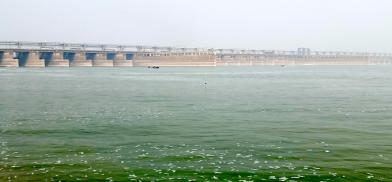
When the ink on the Ganges Water Sharing Treaty between Bangladesh and India dried in December 1996, the mood across borders was of guarded optimism. The architects of this historic deal knew damn well it wasn’t made to last forever. They deliberately attached it to a thirty-year lifespan, working under the supposition that three decades would provide more than ample time for the two neighboring states to build trust and transparent data-sharing practices between one another, and develop the institutional maturity and experience necessary to create a permanent, progressive arrangement. But with the treaty’s expiration date in December 2026 looming precariously close, it is painfully clear that history has not played out as optimistically. We are still nowhere near this desired trust; we still fall short, and worse: Tangible, dutiful. Sometimes cruel forces of the inevitable hard barriers imposed by a global climate crisis are revealing that original framework to be not merely inadequate but dangerously outdated. To the policymakers and people of Bangladesh, however, one urgent, existentially important question now looms: What next after 2026? Is it simply going to be signing a broken system over, or does this climate emergency era require an updated, science-based and resilient new treaty?
To appreciate the severity of this looming deadline, one does not look at the rivers simply as lines drawn on a map, but rather as the lifeblood supporting millions. For Bangladesh, the waters of the Ganges are so much more than a source of agricultural nourishment; they are an ecological backbone of the whole southwestern region. But the story over the last three decades is a grim tale of chronic depravity and systemic failure. Between 1997 and 2016, the period covered by the most critical dry-season measurements, Bangladesh received less water than guaranteed by the treaty a remarkable 65 percent of the time, according to data. This is not a minor statistical anomaly; it is an historic failure in the very same months that water will be needed most to avert drought and ecological collapse.
The toll of this continuous deprivation is etched throughout the Bangladeshi terrain. In the northwestern part of the country, the Barind Tract, once an important agricultural center, is threatened by creeping desertification. With the surface water from the Ganges system declining, farmers are compelled to extract groundwater at unsustainable levels, driving water tables to drop to dangerous depths. Further south, the devastation comes in a different but equally destructive guise. The Sundarbans, the world’s largest contiguous mangrove forest and this country’s most vital natural barrier against violent cyclones from the Bay of Bengal, is silently choking. Mangrove ecosystems need a careful balance of freshwater and saltwater. As the flow of freshwater from the Ganges has been reduced, saltwater is intruding dangerously far inland. The rising salinity is transforming the very structure of the soil, killing off native plant species and stoking a slow motion wave of climate displacement as it renders coastal agriculture impossible. Gaslords choke our oceans and rivers with impossible demand, rendering drinking water toxic and killing coastal women’s reproductive health. As a result, Bangladesh is today obliged to spend an estimated six to seven percentage points of its GDP solely on climate adaptation, essentially providing itself with the means to pay a hefty economic price in the form of managing downstream calamities fueled by upstream diversion.
At the root of today’s diplomatic impasse is a fascinating, if tragic, political paradox: Both countries are using the very climate crisis to defend where they sit in opposite corners of a ring. Bangladesh, which pays the price for the crisis, makes a valid point that accelerated Himalayan glacial melt and increasingly erratic monsoon patterns have fundamentally changed the river’s hydrology. Water delivery commitments, set on paper decades ago, are worthless if the river itself is drying up. Bangladesh argues in this new, unpredictable reality, that a flow-responsive system, dynamic enough to ensure a minimum ecological survival flow even when there are upstream fluctuations is what is required.
India uses the same changing climate to counter, however: that overall basin-flows have decreased so much that keeping old volumetric commitments is simply a matter of numbers; mathematically impossible. Additionally, India argues that creating large-scale upstream storage infrastructure for potential upcoming floods is an essential adaptation measure to protect its climate and food security. In this zero-sum game, climate science is divorced from its promise of governing shared solutions and instead becomes the strategic ammunition in negotiations. This impasse is rooted in the 1996 treaty itself. It forms a static, obdurate document which is based on past hydro-morphological excursions at one single instance of measurement site, Farakka-of from outdated historical data altogether savage to the moved behavior behaviour of current river systems
And South Asia does not have to look far for a way forward. India and Pakistan’s Indus Waters Treaty is a masterclass in institutional resilience. The Indus treaty has survived largely intact despite decades of bitter political enmity, several wars and spells of cross-border fighting. This is because it has a bullet-proof institutional architecture. It has an arrangement for neutral, third-party mediation, or permanent standing technical commission to settle disputes through science (before they become political crises), shared economic investments. There are no such protections in the Ganges treaty. It depends on a Joint Rivers Commission that has no independent authority and operates more as a bureaucratic echo chamber than an actual dispute-resolution mechanism.
So treating the fast-approaching 2026 deadline as a formality that can accommodate a diplomatic rubber-stamp extension would mark a historic failure of imagination and leadership. We need to completely discard the static, volume-based models from our past and create a climate-adaptive structure from scratch. What does that mean, practically speaking? It requires real-time flow sharing, in which water is allocated according to what’s actually flowing through the river today, not based on an allocation that was set from data dating back 40 years. It means making climate modeling a part of life in the very DNA of the treaty, building in a system that automatically reexamines and reshapes allocations every five years based on all the newest scientific projections. Also, the modern treaty cannot be purely bilateral. It needs to empower a strong, independent technical commission and eventually bring upstream neighbors, most notably Nepal, into the fold. Without regional cooperation to govern monsoon storage in the Himalayas for use during the dry season, a permanent solution will remain a mirage.
The December 2026 deadline is not merely clerical; it represents the single greatest opportunity for meaningful water governance reform this region has had in a generation. The rivers have turned, the climate has upped and changed its game, and our diplomatic contracts will need to be rewritten now that this is no longer up for debate. It would be a catastrophe from a diplomatic perspective simply to roll over what’s now an archaic, faulty agreement without operable modern safeguards, adaptive mechanisms and strong institutional architecture. The water security of South Asia, indeed the future habitability of substantial areas of Bangladesh, cannot be secured through endless disputation over broken promises and principles. It will only be guaranteed by putting in place brave, visionary and robust institutions. In fact for Bangladesh, its accomplishment of a fair, living treaty is no political victory—it’s an issue of complete existential survival; and at this negotiating table there can be simply no compromise.
Md Shihab Uddin
Volunteer, UNICEF Bangladesh
The author is an independent researcher and a student of Folklore and Social Development Studies at the University of Rajshahi.He may be contacted at shihab.fsds@gmail.com.